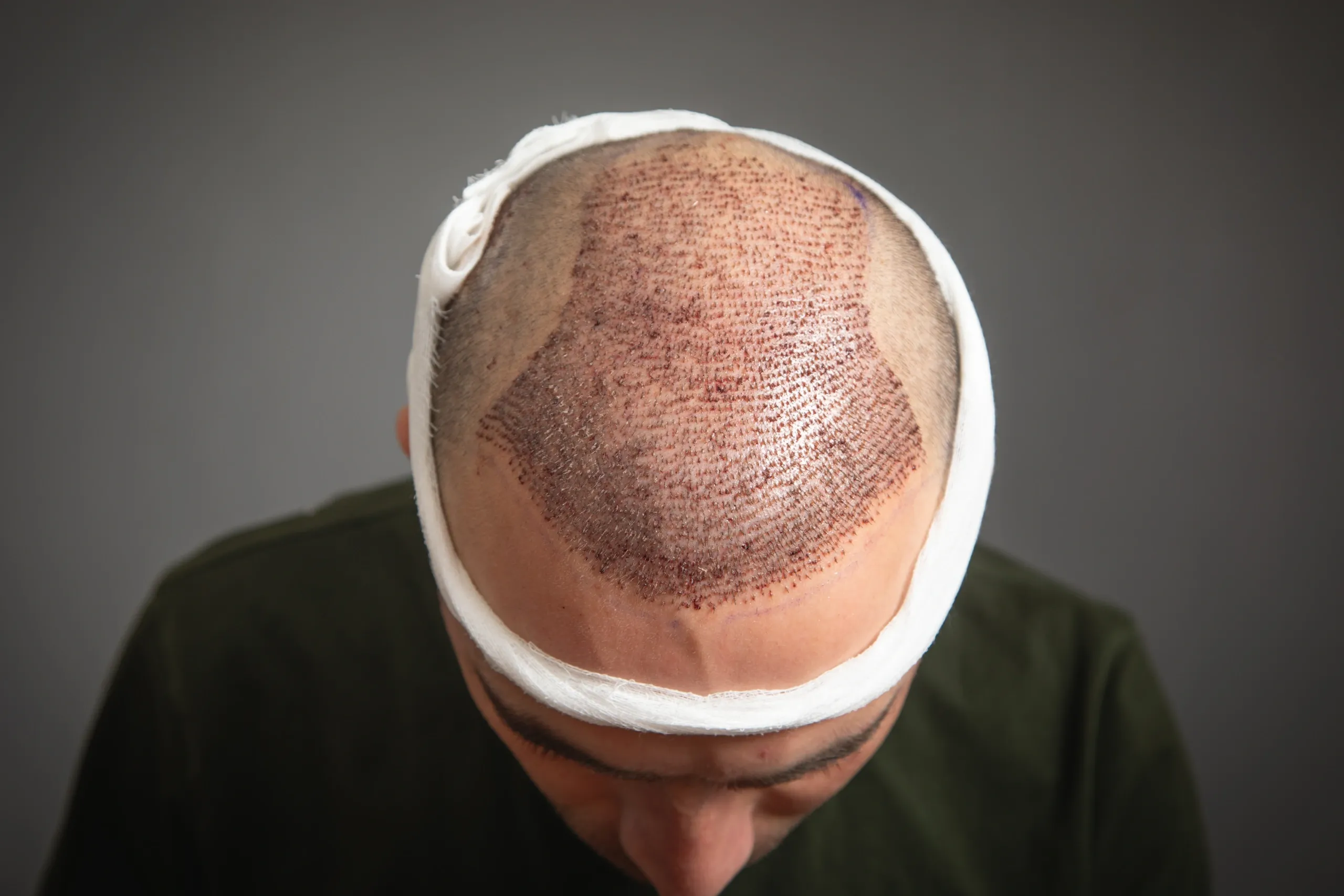
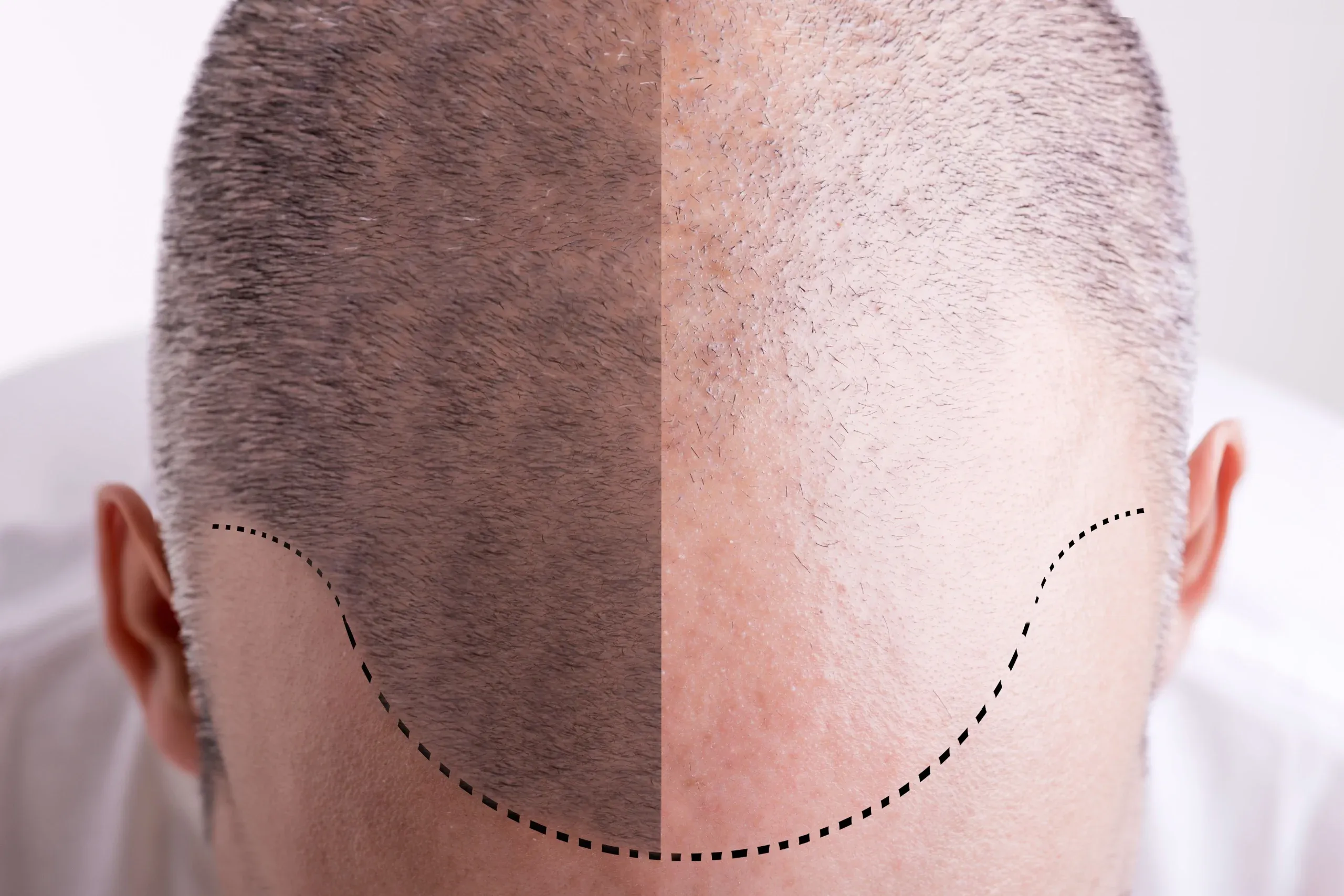
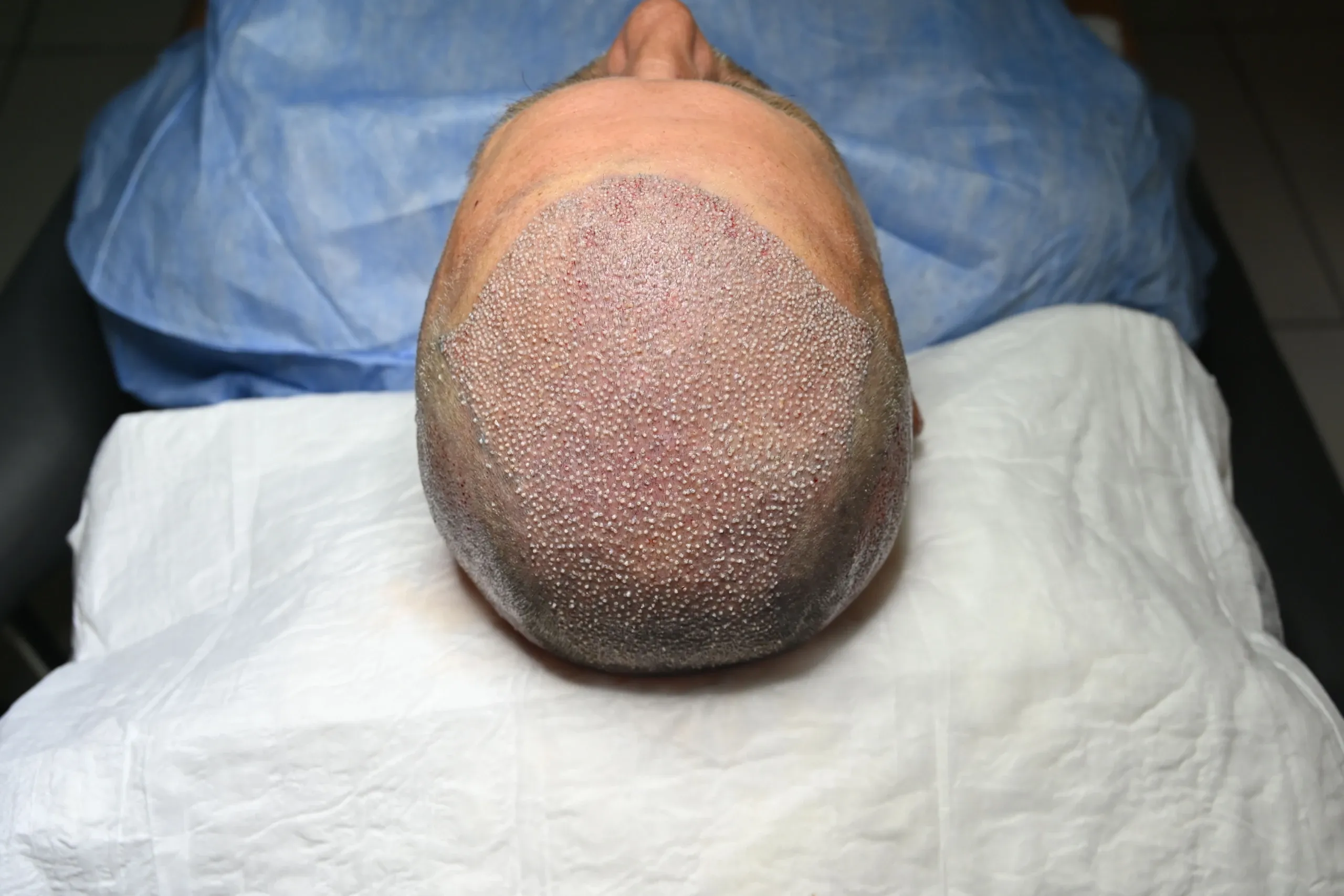
Hair Transplant Scar Treatment in Algonquin, IL - Repair and Prevention

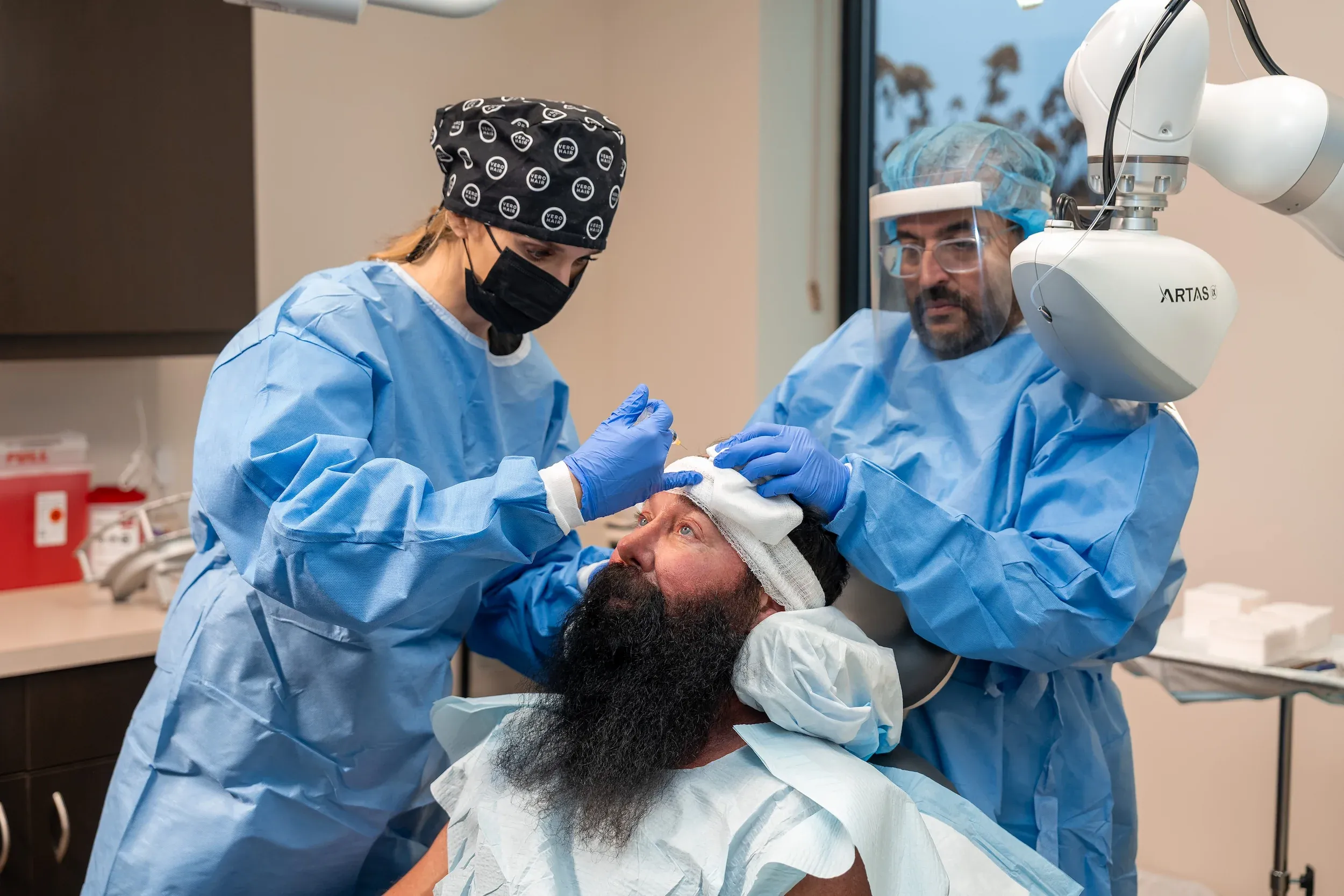
Board-certified dermatologists Dr. Vic Khanna and Dr. Lauren Boshnick use ARTAS robotic FUE technology to minimize scarring and repair visible scars from previous hair transplant procedures.

Hair Transplant Scarring
Common In:FUT strip surgery patients
Scar Types:Linear (FUT) and dot (FUE)
Treatable:Yes, with FUE scar revision
Prevention:ARTAS robotic FUE precision

Why Hair Transplant Scars Happen

The Science Behind Hair Transplant Scarring

Hair transplant scarring is one of the most common concerns patients have before undergoing hair restoration surgery. Whether you are considering your first procedure or seeking repair for visible scars from a previous transplant, understanding the different types of scarring and modern prevention techniques is essential to making an informed decision.

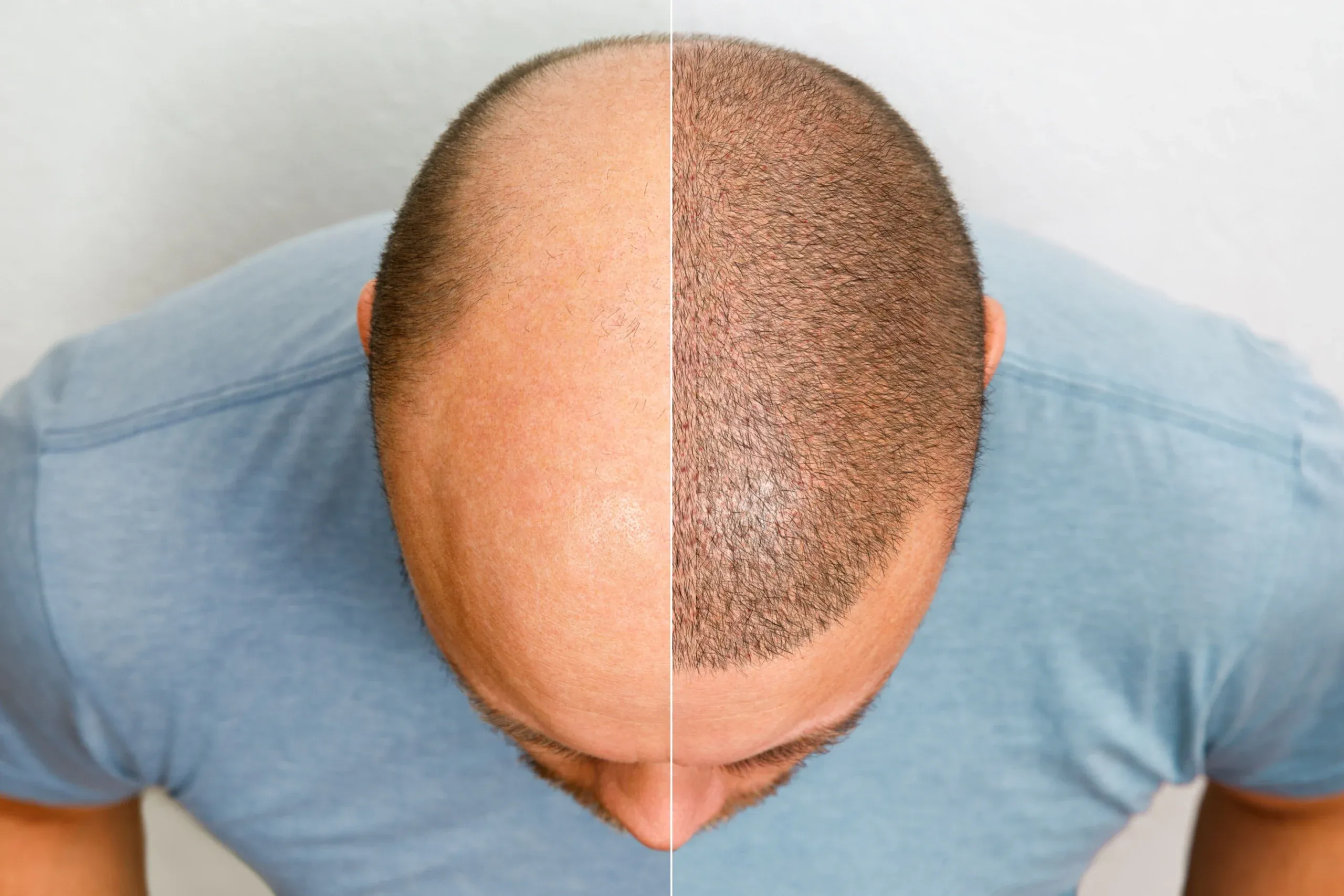
The two primary hair transplant methods—Follicular Unit Transplantation (FUT) and Follicular Unit Extraction (FUE)—produce very different scarring patterns. FUT, also known as strip surgery, removes a linear strip of scalp from the donor area, leaving a visible scar that can stretch over time. FUE extracts individual follicular units using tiny circular punches, producing only small dot-like marks that are virtually undetectable once healed. At DSI Hair in Algonquin, IL, Dr. Khanna and Dr. Boshnick specialize in ARTAS robotic FUE with virtually no visible scarring, offering both first-time patients and those seeking scar revision the most advanced, minimally invasive approach available.

What Causes Hair Transplant Scars?

Factors That Influence Scarring After Hair Restoration

Hair transplant scars form as part of the body's natural wound-healing response. When tissue is disrupted during graft harvesting, the body produces collagen fibers to repair the area—but these fibers align differently than surrounding tissue, creating visible scar tissue. The extent and visibility of scarring depend on several interconnected factors.

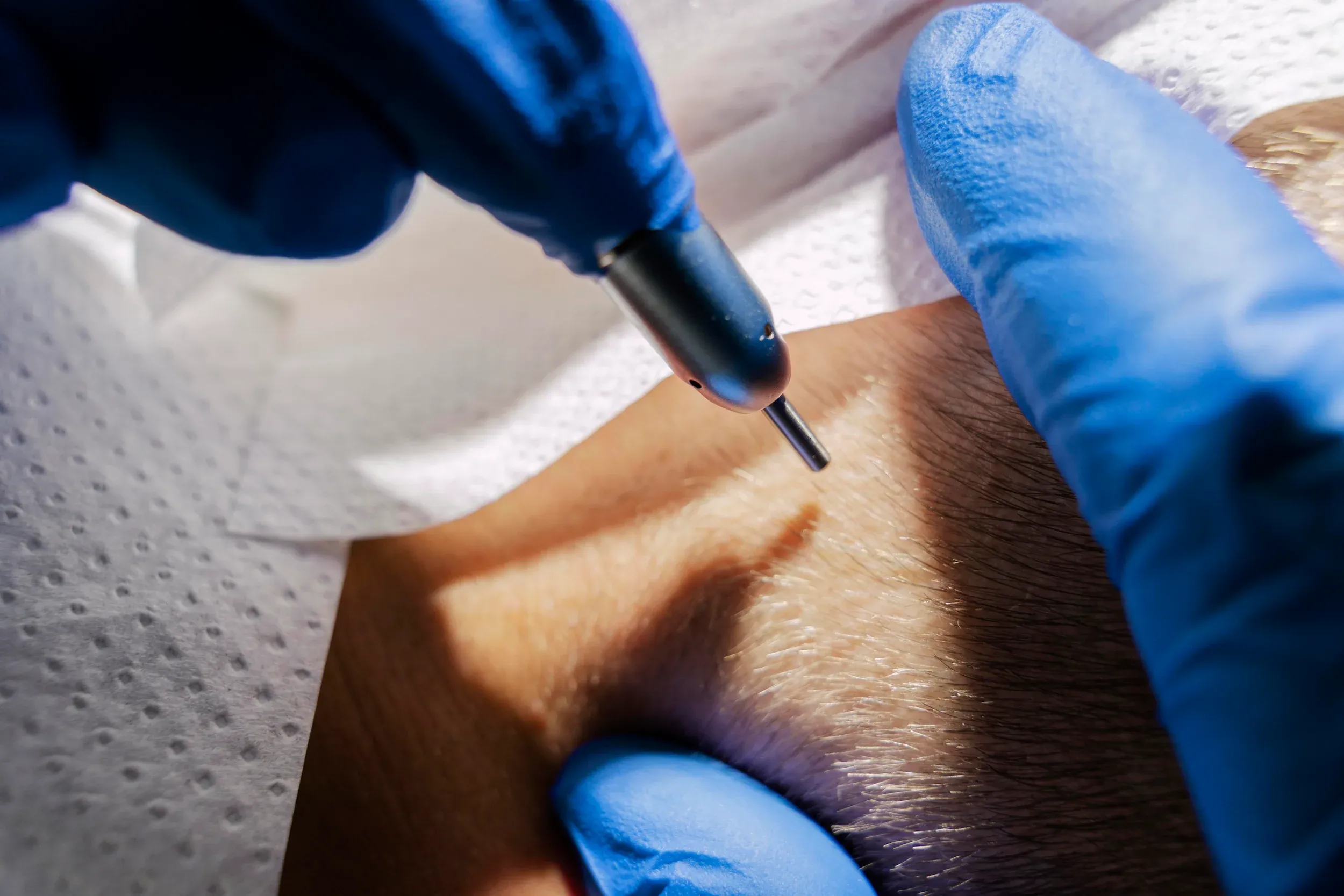
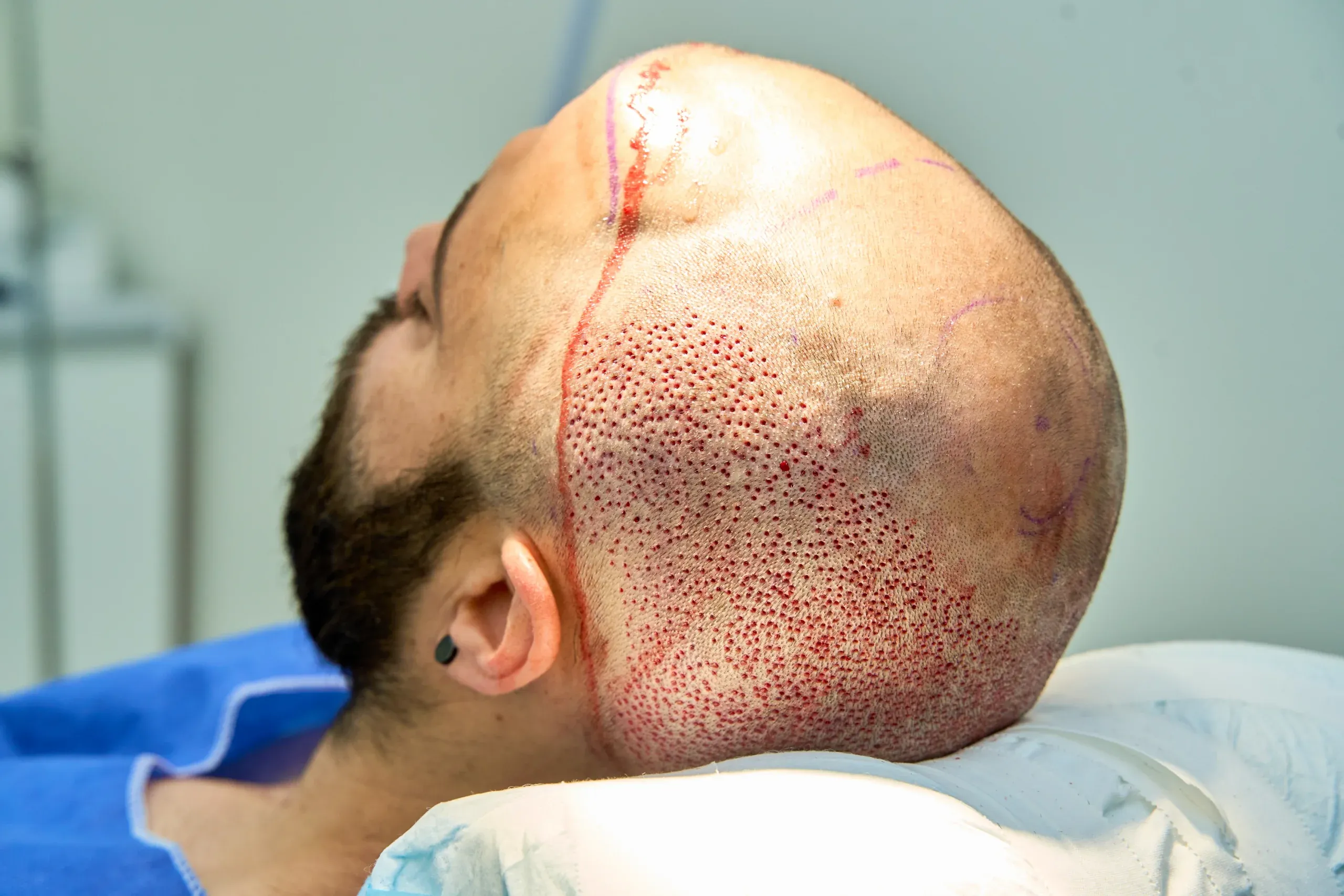
The surgical technique is the single most important variable. FUT strip surgery requires a scalpel incision across the back of the scalp, and the resulting wound is closed with sutures or staples. This linear closure inherently produces a scar that can widen over time due to scalp tension, sometimes becoming a noticeable band across the donor area. In contrast, FUE uses sub-millimeter punch tools to extract individual follicles, leaving only tiny circular wounds that heal to near-invisible pinpoint marks.

Patient-specific factors also play a significant role. Skin type, healing biology, collagen production patterns, and scalp laxity all influence how scars mature. Patients with thicker skin or those prone to keloid formation may experience more prominent scarring. Post-operative care—including wound management, sun protection, and activity restriction—directly impacts final scar appearance. Poor aftercare can lead to wound dehiscence, infection, or hypertrophic scarring that would not otherwise occur.

Comparing Scar Outcomes: FUE, FUT, and ARTAS Robotic FUE

Understanding the Differences in Surgical Scarring

The difference in scarring between FUE and FUT is one of the primary reasons patients choose one method over the other. For a comprehensive side-by-side analysis, visit our FUE vs FUT hair transplant scarring comparison page.

FUT (Strip Surgery) Scarring: FUT leaves a horizontal linear scar across the occipital region of the scalp, typically 15-25 cm long and 2-4 mm wide. While skilled surgeons can minimize this scar with trichophytic closure techniques, it remains visible when hair is cut short. Over time, scalp tension and repeated procedures can cause the scar to widen or become raised. Patients who have undergone multiple FUT procedures may have particularly prominent scarring.

FUE (Manual) Scarring: Manual FUE produces small circular scars (0.8-1.0 mm each) scattered across the donor area. These heal as tiny white dots that are generally undetectable even with closely cropped hair. However, manual FUE accuracy varies with surgeon fatigue and experience, and higher transection rates can lead to unnecessary tissue damage.

ARTAS Robotic FUE Scarring: The ARTAS system at DSI Hair represents the gold standard for minimizing donor-area scarring. Using AI-guided imaging and robotic precision, ARTAS creates consistent 0.8 mm punch extractions with exact depth control and optimal spacing. This eliminates the human variability that can increase scarring in manual FUE, and the result is a donor area that looks completely natural—even with a buzz cut.

Root Causes

Key Factors That Lead to Visible Transplant Scars

FUT Strip Excision

The linear incision and suture closure in strip surgery inherently creates a horizontal scar that can widen under scalp tension over months and years.

Oversized Punch Tools

Using punch instruments larger than 1.0 mm during FUE increases tissue disruption and creates larger, more visible dot scars in the donor area.

Poor Wound Closure

Inadequate suturing technique, excessive tension on wound edges, or staple use instead of layered closure can result in widened, raised, or irregular scars.

Healing Biology

Individual collagen response varies significantly. Patients prone to keloid or hypertrophic scarring may develop thickened, raised scar tissue regardless of surgical technique.

Post-Operative Complications

Wound infection, premature suture removal, excessive physical activity, or sun exposure during healing can worsen scar formation and visibility.

Multiple Procedures

Repeated FUT surgeries in the same donor area compound scar tissue, potentially creating a wider, more noticeable band that limits future transplant options.

Why Choose DSI Hair for Scar Prevention and Repair

Board-Certified Dermatologic Expertise Meets Robotic Precision

  • ARTAS Robotic Precision
  • Dual Board-Certified Dermatologists
  • FUT Scar Revision Specialists
  • 900+ Five-Star Reviews

Hair Transplant Scar Treatment Options at DSI Hair

Compare our approaches to scar prevention and repair.

Treatment Best For Session Time Results Timeline Maintenance
ARTAS Robotic Hair Transplant Scar-free primary transplant and FUT scar revision 4-8 hours 6-12 months for full growth None after healing
FUE vs FUT Patients comparing scarring outcomes before choosing a technique Consultation Depends on chosen method Varies by technique
Hair Transplant Comprehensive restoration including donor scar management 4-8 hours 6-12 months for full growth Minimal long-term care

Signs You May Be Dealing with Hair Transplant Scarring

Recognizing When to Seek Professional Scar Evaluation

  • Visible Linear Scar
  • Widened FUT Scar
  • Raised or Thickened Scar
  • Dot Scarring from FUE
  • Scarring Alopecia Near Scar
  • Fear of Future Scarring

Frequently Asked Questions About Hair Transplant Scars

01 Does a hair transplant leave scars?

All surgical hair transplants create some form of scarring, but the type and visibility vary dramatically by technique. FUT strip surgery leaves a linear scar across the donor area that can be visible with short hairstyles. FUE creates tiny dot scars that are virtually undetectable. ARTAS robotic FUE at DSI Hair produces the smallest, most consistent extractions available, making scarring essentially invisible even with closely cropped hair.

02 What is the difference between FUE and FUT scarring?

FUT (strip surgery) removes a horizontal strip of scalp and closes the wound with sutures, leaving a linear scar typically 15-25 cm long. This scar can widen over time and is visible with short hair. FUE extracts individual follicles through tiny circular punches, leaving only small dot marks (under 1 mm) scattered across the donor area. These heal to nearly invisible white dots. For a detailed comparison, visit our FUE vs FUT page.

03 Can hair transplant scars be fixed?

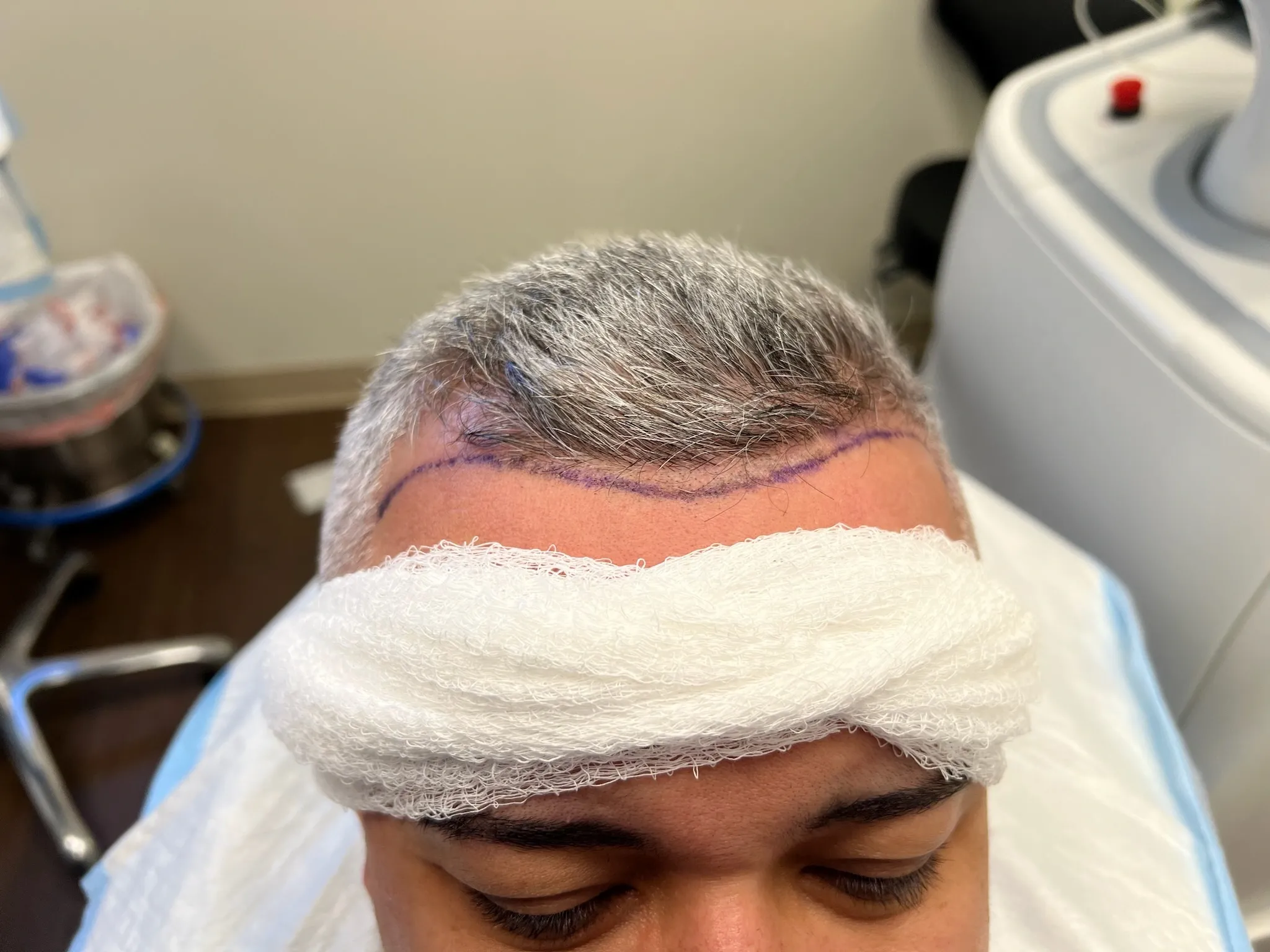
Yes. FUT linear scars can be significantly improved through FUE scar revision, where individual follicular grafts are transplanted directly into the scar tissue to camouflage it with hair growth. Dr. Khanna and Dr. Boshnick at DSI Hair specialize in this technique using ARTAS robotic precision. Other options may include scar excision and re-closure, micropigmentation, or laser treatments, depending on the scar characteristics.

04 How visible are hair transplant scars?

Visibility depends entirely on the technique used. FUT scars are typically visible with hair shorter than a #4 guard and may widen noticeably over years. Manual FUE scars are usually undetectable with hair longer than half an inch. ARTAS robotic FUE scars are the least visible of all methods due to precise, AI-guided 0.8 mm extractions with optimal spacing, and patients can confidently wear buzz cuts without visible scarring.

05 Does ARTAS robotic FUE leave a scar?

ARTAS robotic FUE creates tiny 0.8 mm extraction sites that heal to virtually invisible pinpoint marks within weeks. Unlike manual FUE, the robotic system ensures consistent punch depth and spacing, which prevents clustering or over-harvesting that can create detectable patterns. The vast majority of DSI Hair patients report that their donor area is indistinguishable from natural, untreated scalp. Learn more about the ARTAS robotic FUE process.

06 Can I repair a strip scar from a previous hair transplant?

Absolutely. Strip scar repair is one of the most common reasons patients visit DSI Hair. Dr. Khanna and Dr. Boshnick use ARTAS robotic FUE to transplant individual follicular grafts directly into the linear scar, allowing hair to grow through and camouflage the scar tissue. Most patients see significant improvement after a single scar revision session, with the scar becoming virtually undetectable once the transplanted follicles mature at 6-12 months.

Location2430 Esplanade Drive, Suite B
Algonquin, IL, 60102
New Patients(844) 307-7546
Existing Patients(847) 458-7546

Schedule Your Consultation

Scientific References