Beyond the Hairline: Understanding and Navigating Male Pattern Baldness
Male pattern baldness affects over 50 million men in the U.S. alone. Board-certified dermatologist Dr. Vikram Khanna explains the science behind hair loss, early warning signs, and today's most effective treatment options — from FDA-approved medications to ARTAS robotic hair transplants.
Male pattern baldness — known clinically as androgenetic alopecia — is the most common form of hair loss in men, affecting roughly 50 million Americans. By age 35, about 65% of men notice some degree of thinning. By 50, that number climbs past 85%. Yet despite how common it is, hair loss remains one of the most misunderstood and emotionally charged health concerns men face.
At DSI Hair in Algonquin, IL, board-certified dermatologist Dr. Vikram Khanna helps patients understand what's happening beneath the surface and build a treatment plan grounded in science — not guesswork.
Key takeaway: Hair loss is progressive, but it is also highly treatable when caught early. The sooner you act, the more options you have.
What Causes Male Pattern Baldness?
Male pattern baldness is driven by a combination of genetics and hormones. The primary culprit is dihydrotestosterone (DHT), a byproduct of testosterone produced by the enzyme 5-alpha reductase. In men who are genetically susceptible, DHT binds to receptors in scalp hair follicles and gradually shrinks them — a process called follicular miniaturization. Over time, affected hairs grow thinner, shorter, and lighter until they stop emerging altogether.
Genetics account for approximately 80% of your risk. If your father experienced significant hair loss, your relative risk increases five to six times[1]. But the inheritance pattern is polygenic, meaning genes from both parents contribute. This is why some men with full-haired fathers still lose hair, and vice versa.
The Norwood Scale: Staging Your Hair Loss
Dermatologists use the Hamilton-Norwood scale to classify the progression of male pattern baldness into seven stages:
- Stage 1: No visible hair loss
- Stage 2: Slight recession at the temples, forming an "M" shape
- Stage 3: The first clinically significant stage — noticeable thinning at the temples and/or crown
- Stage 4: Deeper recession and a larger bald spot at the crown, still separated by a band of hair
- Stage 5: The band between the frontal and crown areas begins to thin
- Stage 6–7: The two balding areas merge, leaving a horseshoe-shaped ring of hair around the sides and back
Knowing your stage matters because it directly influences which treatments will be most effective for you.
Early Warning Signs You Shouldn't Ignore
Hair loss doesn't happen overnight. Here are the signs that should prompt a consultation:
- A receding hairline, especially at the temples
- Thinning on the crown or along the part line
- More hair on your pillow, in the shower drain, or on your brush than usual
- Shorter, finer regrowth hairs replacing thicker ones
- A widening part that exposes more scalp
Approximately 16% of men between 18 and 29 already show early signs of male pattern baldness. If you notice persistent changes, don't wait. Every FDA-approved treatment works best when started before significant loss has occurred.
Treatment Options That Actually Work
Finasteride (Propecia)
Finasteride is an oral medication that blocks 5-alpha reductase, reducing DHT levels by about 70%. Clinical trials show that 48% of men see improvement at one year and 66% at two years, compared to just 7% on placebo. Long-term data over 10 years demonstrates that over 90% of men either maintain or improve their hair[1][2].
It's taken as a 1 mg daily pill and is generally well-tolerated, though a small percentage of men experience side effects that should be discussed with your dermatologist.
Minoxidil (Rogaine)
Minoxidil is a topical vasodilator available over the counter in 2% and 5% formulations. The 5% solution shows a clinical cure rate of about 52% after 12 months of consistent twice-daily application. It works by stimulating hair follicles and prolonging the growth phase of the hair cycle.
Combination Therapy
The most effective non-surgical approach combines finasteride and minoxidil. A recent study found that 92.4% of patients on combined therapy showed stable or improved outcomes over 12 months — significantly better than either medication alone.
PRP (Platelet-Rich Plasma) Therapy
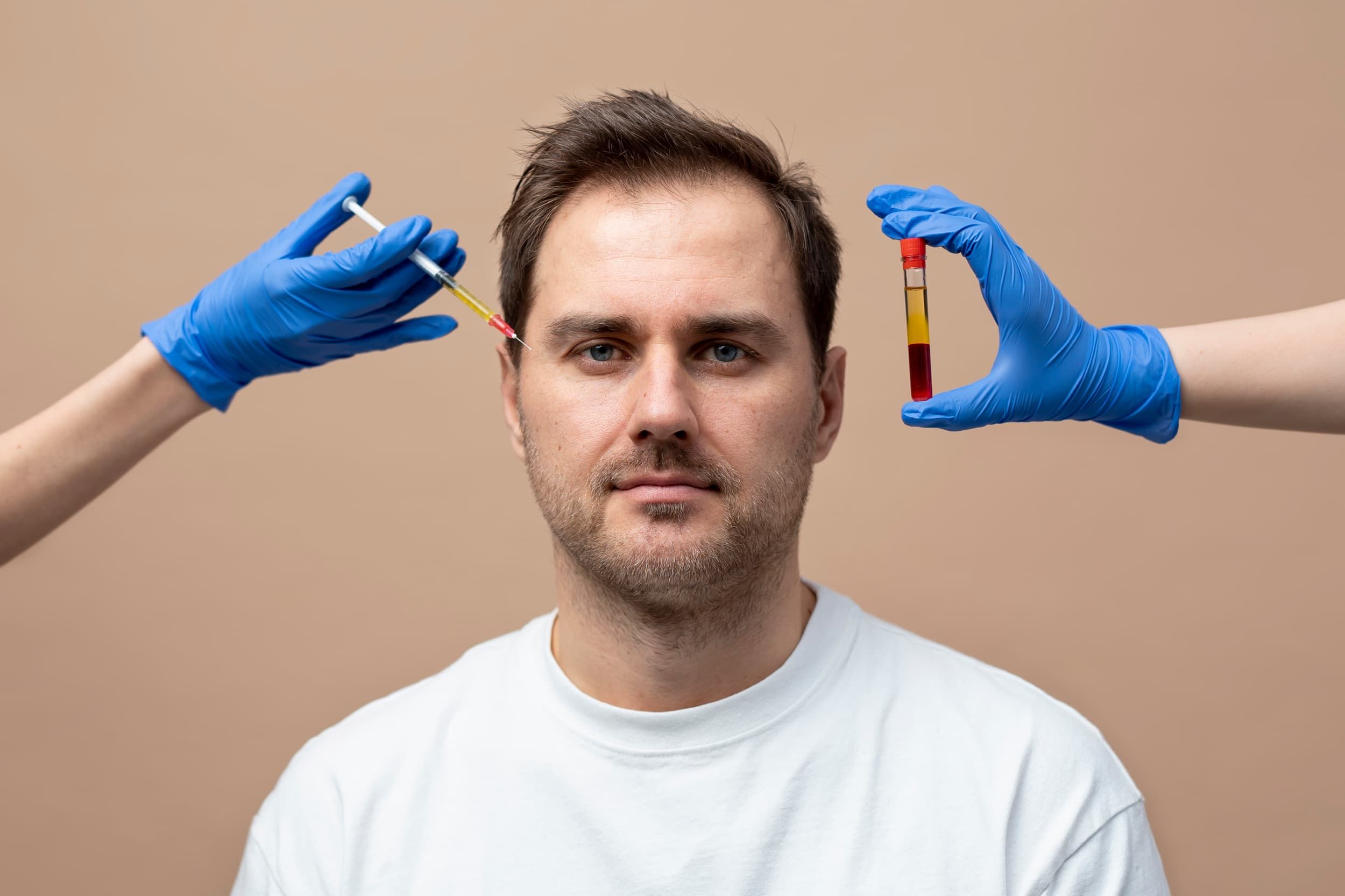
PRP uses concentrated growth factors from your own blood to stimulate dormant hair follicles. A meta-analysis of clinical data shows an average increase of 14.38 hairs per cm² compared to controls, with nearly 80% of patients reporting clinical improvement. At DSI Hair, we use PRP as both a standalone therapy and as a complement to other treatments for enhanced results[4].
ARTAS Robotic Hair Transplant
For patients with more advanced hair loss, the ARTAS robotic hair transplant represents the most precise hair restoration technology available today. This FDA-cleared system uses AI-driven algorithms to identify and harvest optimal donor grafts with a transection rate as low as 2–5% — far better than the 5–15% seen with manual techniques.
Key advantages of ARTAS:
- 98% graft survival rate — nearly every transplanted follicle takes root
- No linear scar — unlike the traditional strip method (FUT)
- Faster recovery — most patients return to normal activities within days
- Natural, undetectable results — precision placement creates a hairline that looks like it was always yours
New hair growth typically appears around three months post-procedure, with full results visible at 12 months. Patient satisfaction rates exceed 91%[5].
Low-Level Laser Therapy (LLLT)
FDA-cleared laser devices stimulate cellular activity in hair follicles through photobiomodulation. Clinical trials show a mean hair growth increase of 48% compared to 11% with sham devices. LLLT is most effective when combined with medical therapies like minoxidil or finasteride[6].
The Psychological Side of Hair Loss
Let's be honest: losing your hair can affect how you feel about yourself. Research shows that approximately 75% of men with male pattern baldness report reduced self-confidence, and 60% have experienced teasing about their condition.
However, a 2024 meta-analysis found that most men with androgenetic alopecia do not develop clinically significant anxiety or depression[3]. The psychological impact varies widely — and for many men, taking proactive steps toward treatment is itself a powerful confidence booster.
If hair loss is causing you significant distress, that's a valid reason to seek treatment. There's no minimum amount of loss required before you "deserve" to do something about it.
Why Early Action Matters
Hair restoration is not about vanity — it's about options. The biological reality is straightforward: once a follicle has been miniaturized for too long, it becomes increasingly difficult to revive. Treatments like finasteride and minoxidil can slow or stop progression, but they work best on follicles that are thinning, not gone.
This is why Dr. Khanna emphasizes comprehensive evaluation at the first sign of change. A personalized treatment plan might include:
- Medical therapy (finasteride + minoxidil) to stabilize and regrow
- PRP injections to boost follicle health
- ARTAS robotic transplant to restore areas where regrowth isn't possible
- Ongoing maintenance to protect long-term results
Take the First Step
Male pattern baldness is progressive, but it doesn't have to define you. Whether you're noticing the first signs of thinning or you've been dealing with hair loss for years, there are proven, science-backed solutions available today.
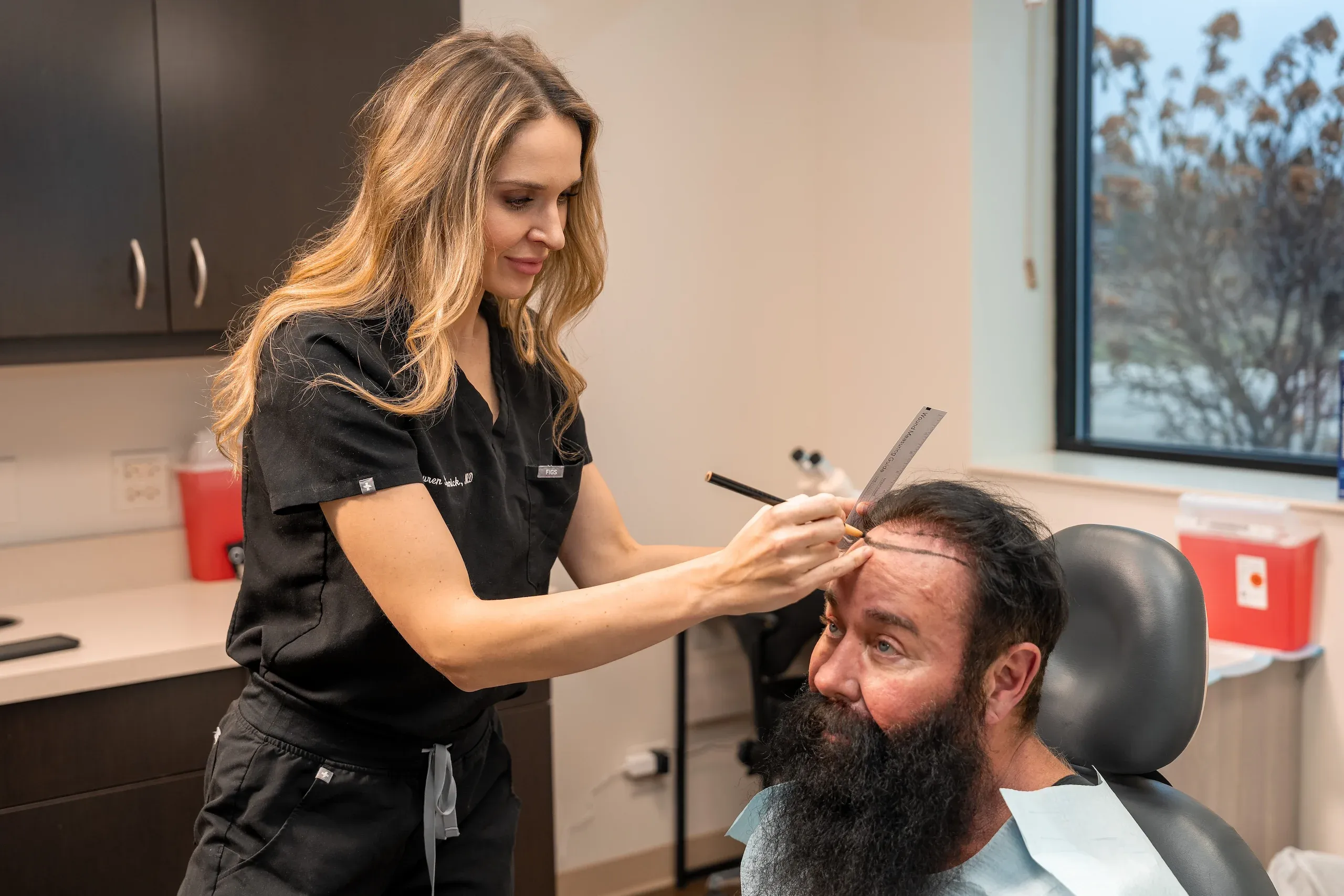
At DSI Hair in Algonquin, IL, Dr. Vikram Khanna offers confidential consultations to evaluate your hair loss, discuss your goals, and recommend a treatment plan tailored to your specific situation. From FDA-approved medications to ARTAS robotic hair transplants, we provide the full spectrum of hair restoration options under one roof.
Schedule your consultation today and take the first step beyond the hairline.
References
[1] Kaufman KD, Olsen EA, et al. Finasteride in the treatment of men with androgenetic alopecia. J Am Acad Dermatol. 1998;39(4):578-89. (PMID: 9777765)
[2] Finasteride Male Pattern Hair Loss Study Group. Long-term (5-year) multinational experience with finasteride 1 mg. Eur J Dermatol. 2002;12(1):38-49. (PMID: 11809594)
[3] Frith H, Jankowski GS. Psychosocial impact of androgenetic alopecia on men: A systematic review and meta-analysis. Psychol Health Med. 2024;29(4):804-824. (PMID: 37605428)
[4] Donnelly C, et al. The role of platelet-rich plasma in androgenetic alopecia: A systematic review. J Cosmet Dermatol. 2024;23(5):1551-1559. (PMID: 38284294)
[5] Zhu Y, et al. A Comparative Study on Robotic Hair Restoration Technology Versus Traditional FUE in Male Androgenetic Alopecia. J Cosmet Dermatol. 2024. (PMID: 39297414)
[6] Jimenez JJ, et al. Efficacy and safety of a low-level laser device in treatment of male and female pattern hair loss. Am J Clin Dermatol. 2014;15(2):115-27. (PMID: 24474647)