Oral vs. Topical Minoxidil: Which Is Better for Hair Loss?
Low-dose oral minoxidil is changing how dermatologists treat hair loss. Dr. Vikram Khanna compares oral and topical formulations, breaking down the latest research on efficacy, side effects, and who benefits most from each approach.
Minoxidil: From Blood Pressure Medication to Hair Loss Breakthrough
Originally developed in the late 1950s as a vasodilator, minoxidil was approved by the FDA in 1979 under the brand name Loniten for severe hypertension. During clinical trials, researchers noticed a remarkable side effect: patients were growing new hair. By the mid-1980s dermatologists were prescribing it off-label, and in 1988 the FDA approved topical minoxidil (Rogaine) as the first medication for androgenetic alopecia.
Now the oral form is experiencing a resurgence — not at high cardiovascular doses, but at much lower doses targeting hair growth. At DSI Hair in Algonquin, IL, Dr. Vikram Khanna works with patients daily to determine which formulation fits their clinical profile.
Key takeaway: Both oral and topical minoxidil are effective for hair loss, but they differ in convenience, side effects, and how they work in the body. The right choice depends on your hair loss pattern, medical history, and treatment goals — which is why professional evaluation matters.
How Topical Minoxidil Works
Available as a 2% or 5% solution or foam, topical minoxidil is applied to the scalp once or twice daily and remains the only FDA-approved OTC treatment for pattern hair loss. As a potassium channel opener, it is converted to minoxidil sulfate by the enzyme sulfotransferase in follicle cells. This prolongs the anagen (growth) phase, increases follicular size, and stimulates blood flow to the dermal papilla[1]. Most patients see improvement after 3 to 4 months, with optimal results by 6 to 12 months.
Side effects are mostly localized: scalp irritation, dryness, itching, and contact dermatitis (especially with alcohol-based liquids). The foam version causes less irritation. Temporary increased shedding in the first 2 to 8 weeks is normal as dormant follicles cycle into growth.
The Rise of Low-Dose Oral Minoxidil
Low-dose oral minoxidil (LDOM) has gained significant traction as an off-label hair loss treatment at doses of 0.625 mg to 5 mg daily — a fraction of the 10 to 40 mg used for blood pressure. “At low doses, we harness the hair growth benefits while significantly minimizing cardiovascular effects,” explains Dr. Khanna.
Adherence is a major challenge with topical minoxidil — the daily routine of applying, drying, and managing residue leads to suboptimal compliance. A single daily pill eliminates this friction. Additionally, some “non-responders” to topical minoxidil have low sulfotransferase enzyme activity in their scalp. Oral minoxidil bypasses this bottleneck by being metabolized systemically through the liver.
Efficacy: What the Research Shows
A landmark 2024 randomized clinical trial in JAMA Dermatology compared 5 mg oral minoxidil to 5% topical minoxidil in men over 24 weeks. Overall, oral did not demonstrate superiority, though photographic analysis showed it was superior specifically on the vertex (crown)[2].
A separate 2024 RCT comparing 1 mg oral to 5% topical found comparable outcomes with no statistically significant difference[3]. These findings were confirmed by a 2025 meta-analysis concluding that both formulations deliver equivalent improvements in hair density and diameter.
The takeaway: both forms deliver meaningful results. The choice often comes down to side effect tolerance, lifestyle, and individual response rather than a clear efficacy winner.
Side Effects: A Detailed Comparison
Topical Minoxidil
- Scalp irritation and dryness — Most common, especially with propylene glycol-based liquids
- Contact dermatitis — Reactions to vehicle ingredients rather than minoxidil itself
- Unwanted facial hair — From solution transfer to face or pillowcases
- Initial shedding — Temporary increased hair fall in the first 2 to 8 weeks
Oral Minoxidil
- Hypertrichosis — The most prevalent side effect (15–50% depending on dose). A multicenter study of 1,404 patients found it in 15.1% of cases, though it rarely caused discontinuation (0.5%)[4]
- Fluid retention — Occurs in 1.3–10% of patients, typically within the first few months
- Dizziness — Mild blood pressure changes from the vasodilatory mechanism
- Headache — Reported in approximately 14% of patients
- Cardiac considerations — Serious effects are rare at low doses but warrant baseline evaluation
A 2020 systematic review of 442 patients across 14 studies confirmed that low-dose oral minoxidil has a significantly lower adverse effect rate than standard cardiovascular doses[5].
Who Is a Good Candidate for Each Form?
Topical may be best if you:
- Prefer an FDA-approved treatment with decades of safety data
- Have mild to moderate thinning and are comfortable with daily application
- Want to avoid systemic side effects
Oral may be better if you:
- Tried topical without adequate response (possible low sulfotransferase activity)
- Find the daily topical routine difficult to maintain
- Experience scalp irritation from topical formulations
- Have diffuse thinning difficult to target topically
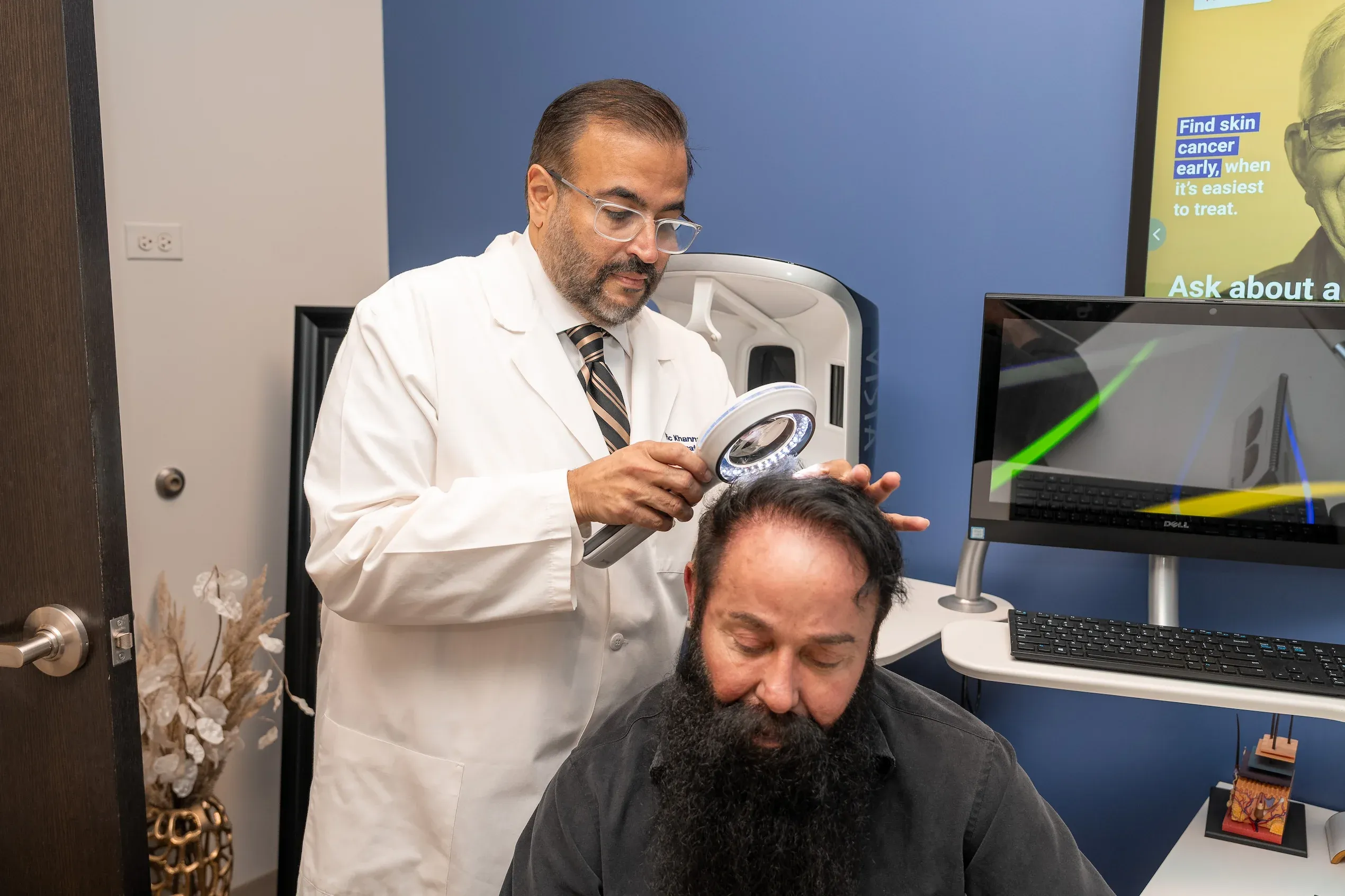
“I evaluate each patient individually — pattern of loss, treatment history, medical background, lifestyle — to determine which formulation will deliver the best results,” Dr. Khanna notes.
Why Professional Supervision Matters
Oral minoxidil should only be taken under physician guidance. At DSI Hair, Dr. Khanna's protocol includes comprehensive medical history screening, baseline vitals and labs (blood pressure, heart rate, renal function), individualized dosing that starts low and titrates based on response, periodic follow-up monitoring, and cardiac screening (ECG) when indicated.
Combination Therapies: Maximizing Results
Dr. Khanna frequently designs multi-modal protocols tailored to each patient.
Minoxidil + Finasteride
Finasteride blocks DHT production while minoxidil stimulates follicular growth. Together they target hair loss through complementary mechanisms and often outperform either alone.
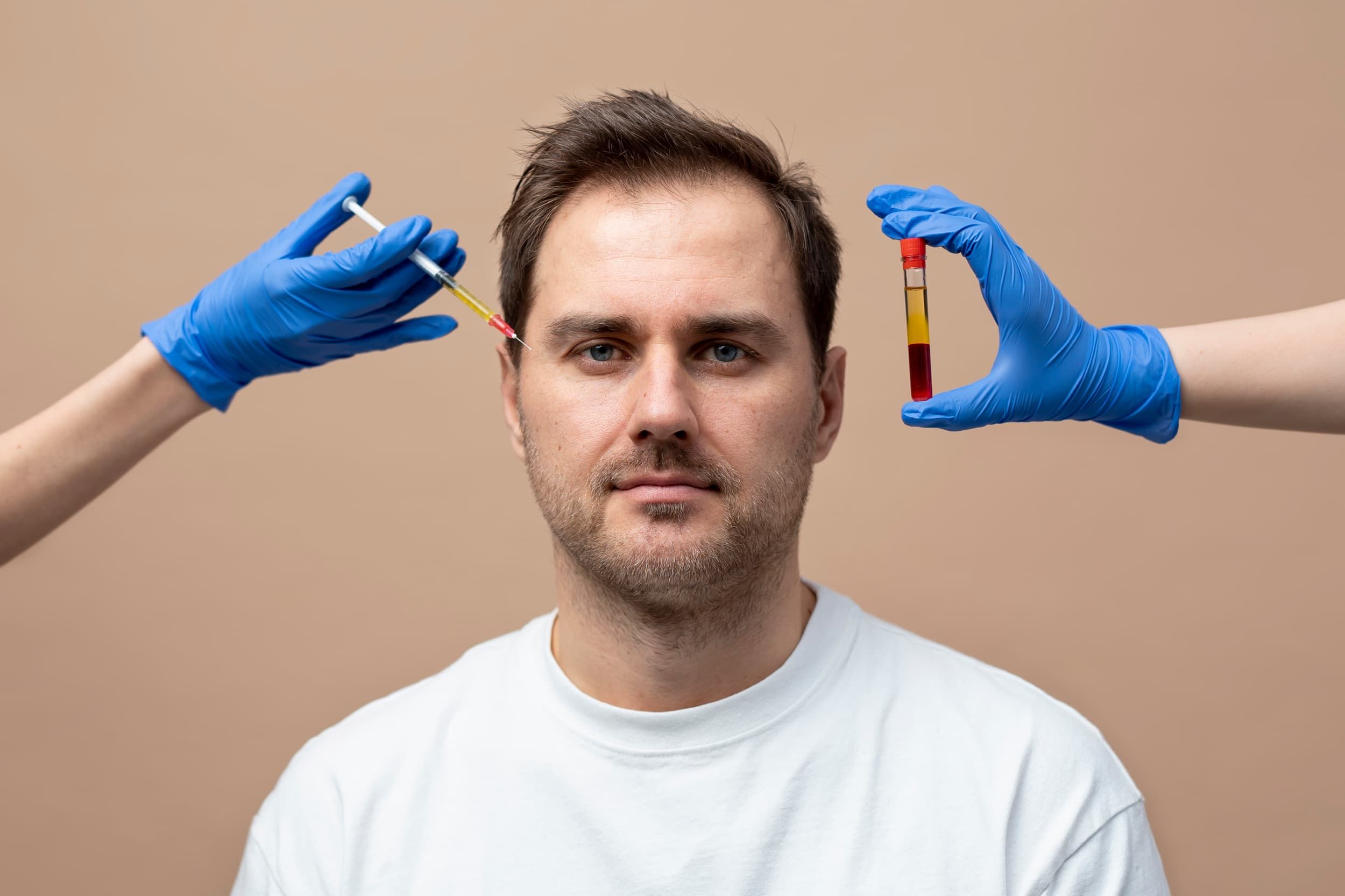
Minoxidil + PRP Therapy
Platelet-rich plasma harnesses concentrated growth factors from your own blood. A 2022 study showed that combining PRP with minoxidil increased hair density by 32% and shaft diameter by 26% — significantly exceeding either treatment alone[6].
Minoxidil + LLLT
Low-level laser therapy stimulates cellular energy production in follicles. Combined with minoxidil, it can enhance absorption and follicular response, particularly for early-stage thinning.
Advanced Options
For more advanced hair loss, Dr. Khanna may combine medical therapies with the ARTAS Robotic Hair Transplant — a minimally invasive, precision-guided approach. Minoxidil is often incorporated pre- and post-transplant to optimize graft survival and stimulate surrounding native hair.
Dr. Khanna's Personalized Approach
“Hair loss is multifactorial — genetics, hormones, nutrition, stress, and medical conditions all play a role,” says Dr. Khanna. “My goal is to identify the specific drivers and select therapies that deliver the most meaningful, lasting results.” With over 20 years of board-certified dermatology experience, he creates individualized plans that evolve as your restoration journey progresses.
Take the Next Step
If you are experiencing hair loss and want to understand whether oral minoxidil, topical minoxidil, or a combination approach is right for you, the first step is a professional evaluation. Dr. Vikram Khanna and the team at DSI Hair in Algonquin, IL are here to help.
Schedule your consultation today by calling (844) 307-7546 or visiting dsihair.com.
References
- Suchonwanit P, Thammarucha S, Leerunyakul K. Minoxidil and its use in hair disorders: a review. Drug Des Devel Ther. 2019;13:2777-2786. (PMID: 31496654)
- Penha MA, Miot HA, Kasprzak M, Ramos PM. Oral minoxidil vs topical minoxidil for male androgenetic alopecia: a randomized clinical trial. JAMA Dermatol. 2024;160(6):600-605. (PMID: 38598226)
- Asilian A, Farmani A, Saber M. Clinical efficacy and safety of low-dose oral minoxidil versus topical solution in the improvement of androgenetic alopecia: a randomized controlled trial. J Cosmet Dermatol. 2024;23(3):949-957. (PMID: 38031516)
- Vaño-Galván S, Pirmez R, Hermosa-Gelbard A, et al. Safety of low-dose oral minoxidil for hair loss: a multicenter study of 1404 patients. J Am Acad Dermatol. 2021;84(6):1644-1651. (PMID: 33639244)
- Jimenez-Cauhe J, Saceda-Corralo D, Rodrigues-Barata R, et al. Safety of low-dose oral minoxidil treatment for hair loss: a systematic review and pooled-analysis of individual patient data. Dermatol Ther. 2020;33(6):e14276. (PMID: 32757405)
- Pakhomova EE, Smirnova IO. Combination therapy with platelet-rich plasma and minoxidil leads to better clinical results than monotherapy with these methods in men with androgenetic alopecia. Int J Trichology. 2022;14(1):1-7. (PMID: 35300100)