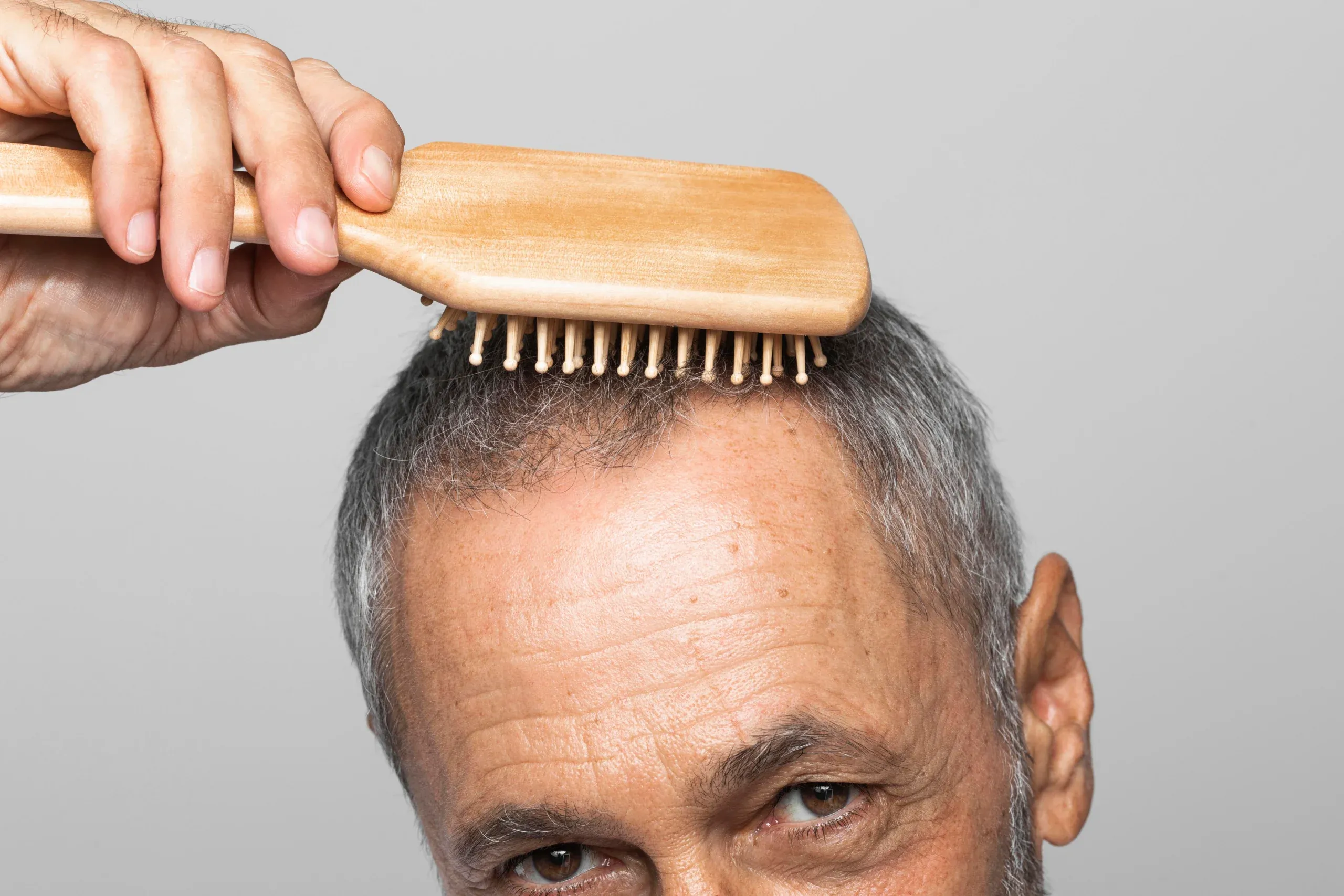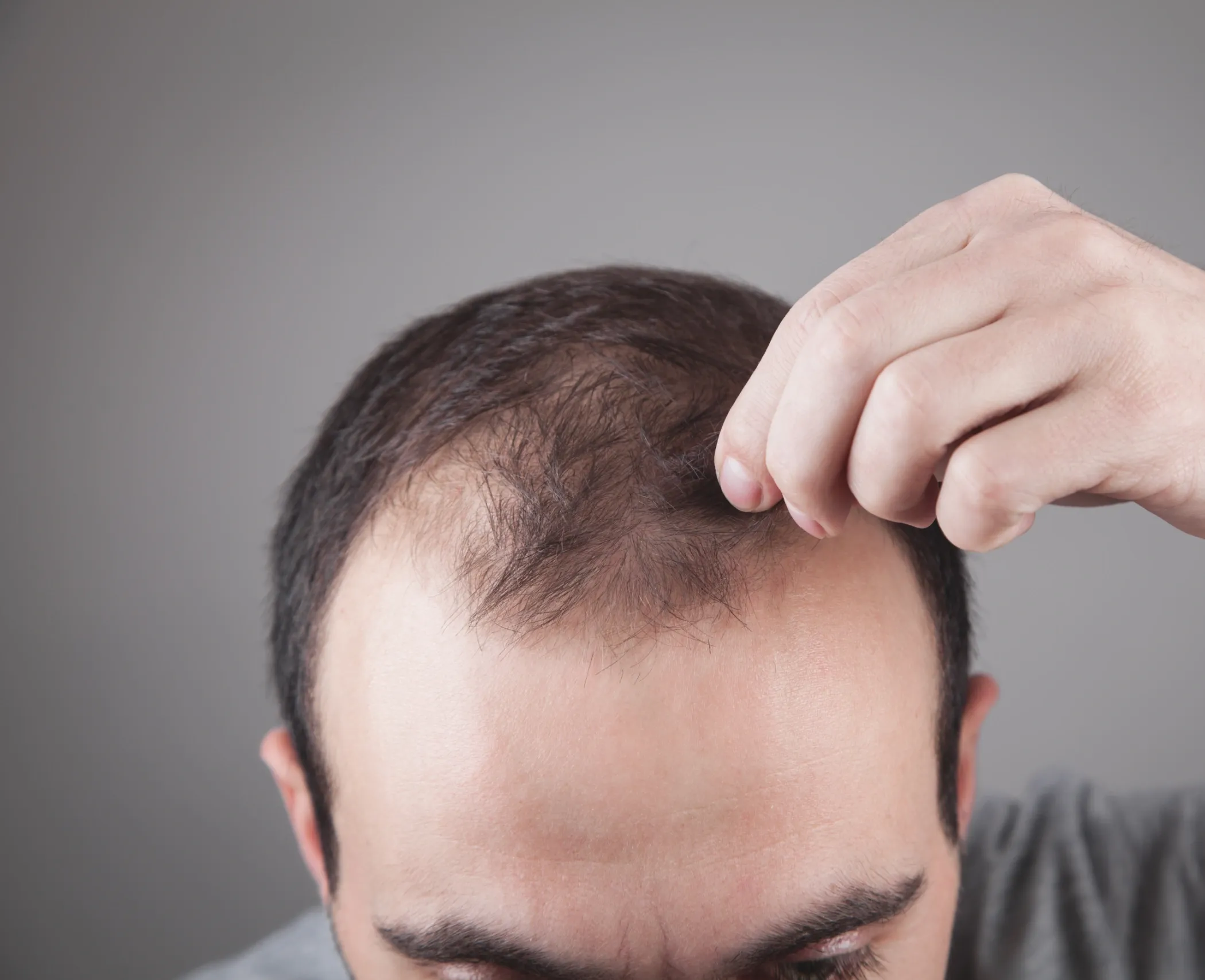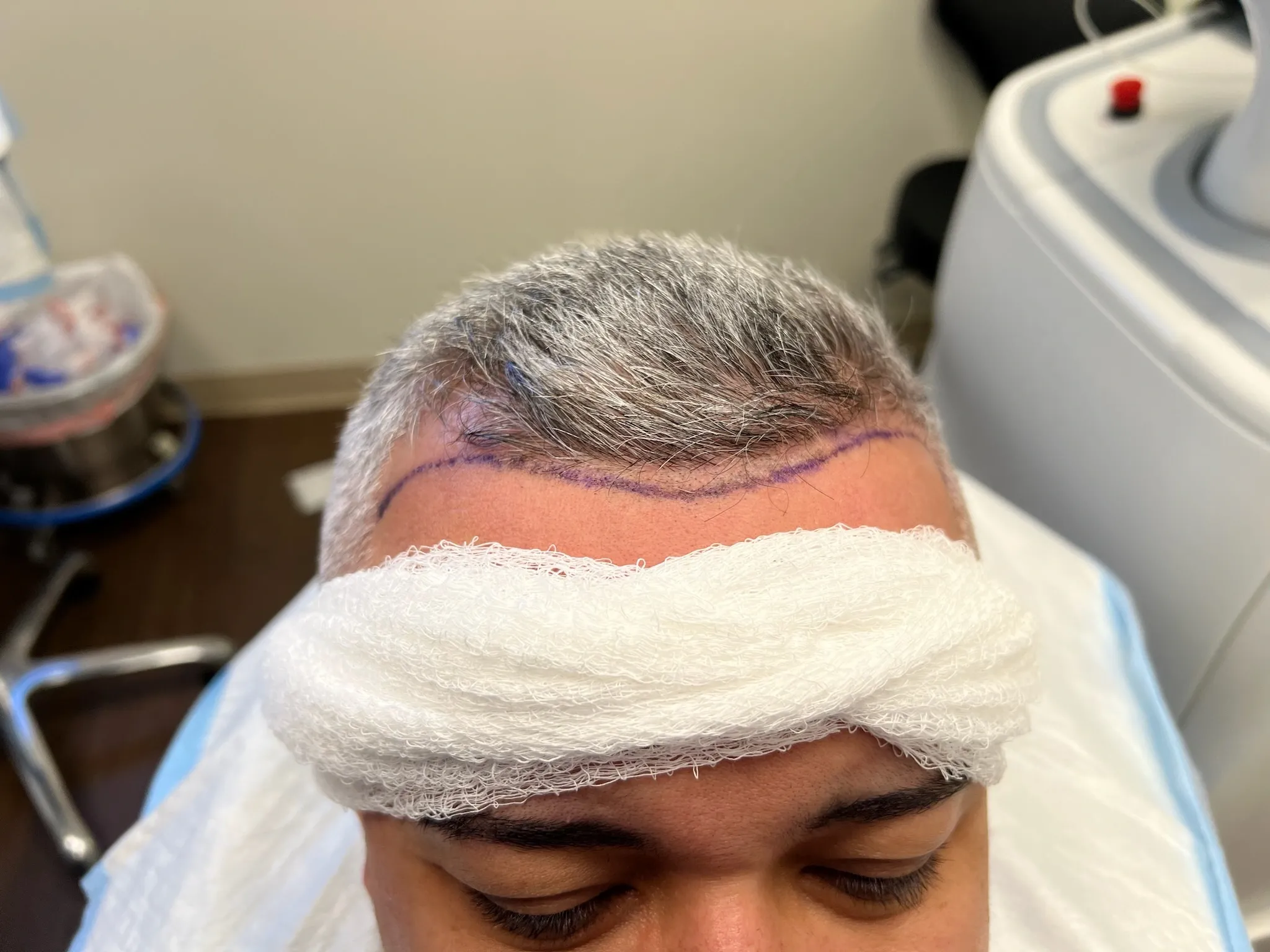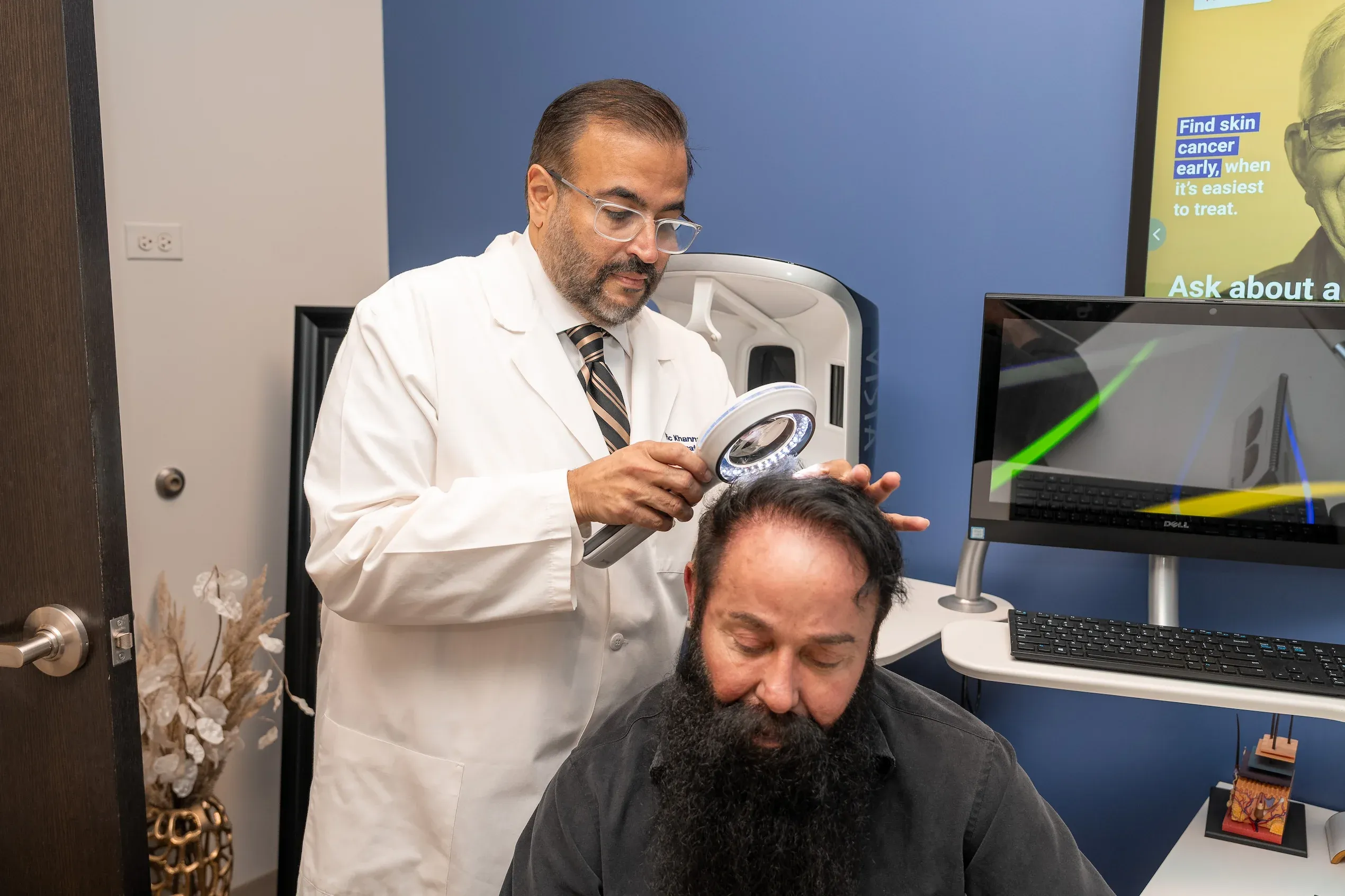
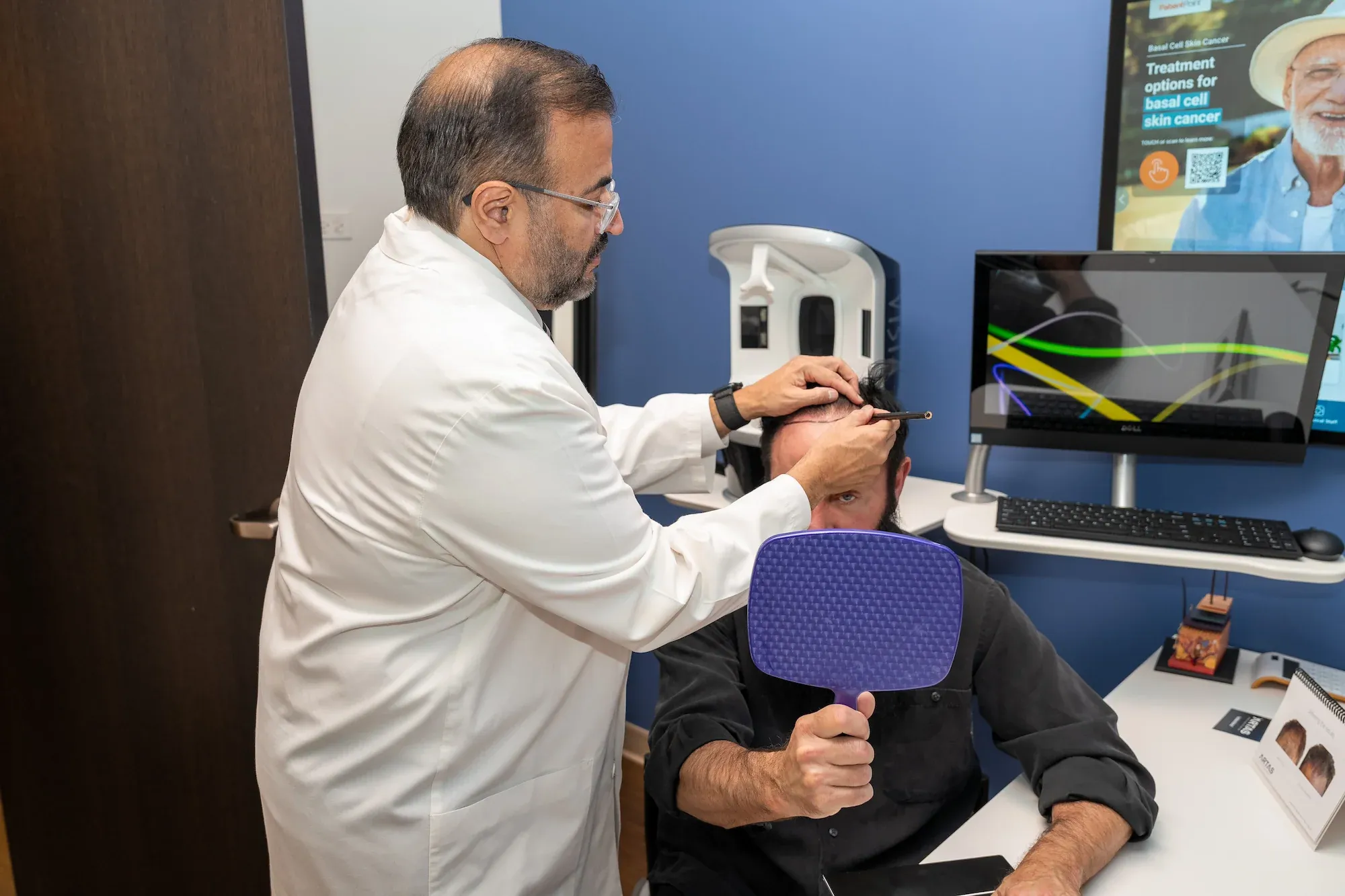

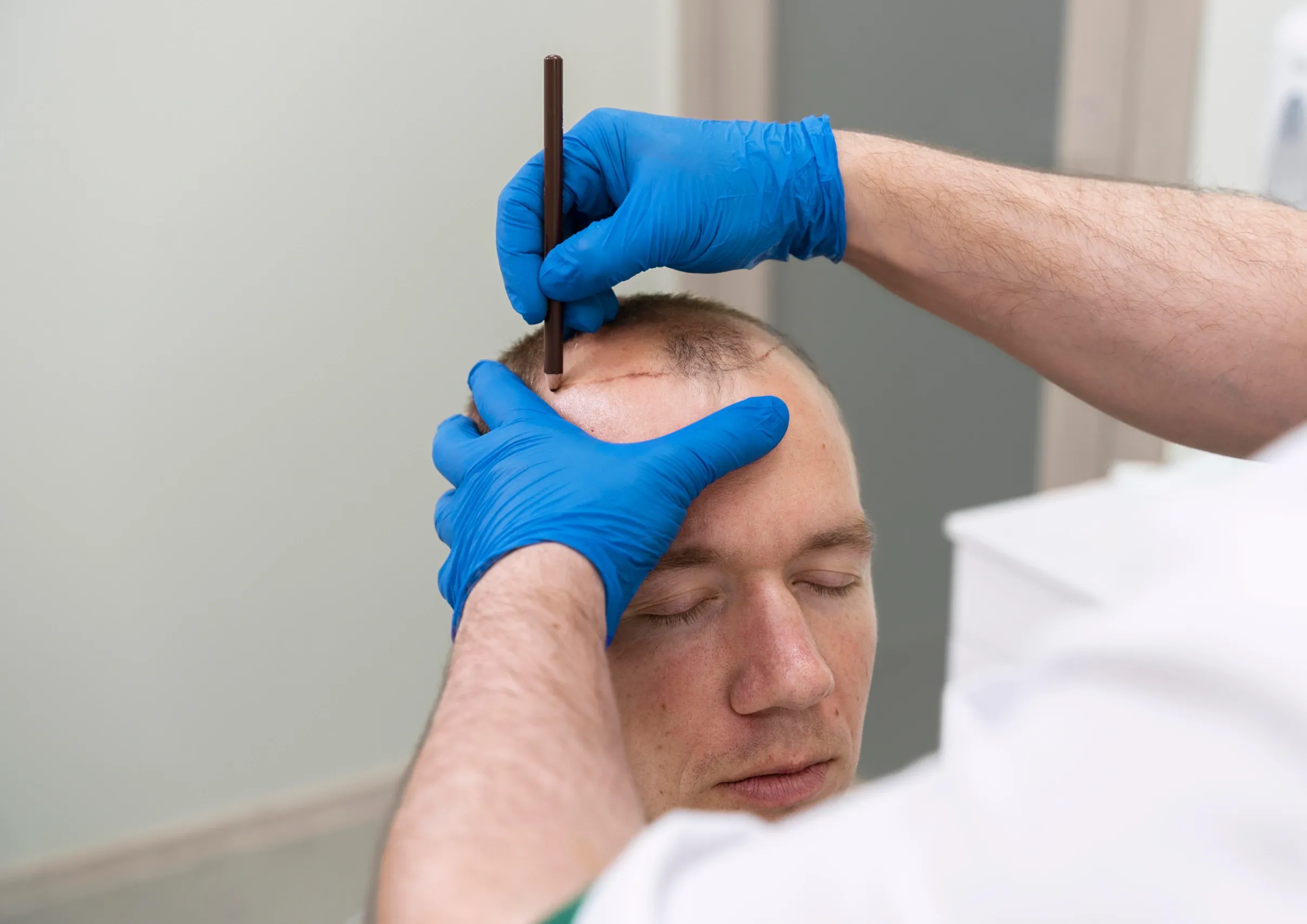
The hairline recedes before other areas because the hair follicles along the frontal and temporal scalp contain the highest concentration of androgen receptors. These receptors bind to dihydrotestosterone (DHT), a potent androgen converted from testosterone by the enzyme 5-alpha reductase. When DHT attaches to susceptible follicles, it triggers a process called follicular miniaturization — each successive growth cycle produces a thinner, shorter, less pigmented hair until the follicle eventually stops producing visible hair altogether.
This is why men with identical testosterone levels can have vastly different hairlines: it is not the amount of DHT circulating in the blood, but the genetic sensitivity of the follicle receptors that determines whether recession occurs. The temporal and frontal follicles are genetically programmed to be more DHT-sensitive than those at the crown or back of the scalp, which is why the hairline is almost always the first casualty of androgenetic alopecia.